YOUR GUIDE TO THE AREA
Discover Escalante
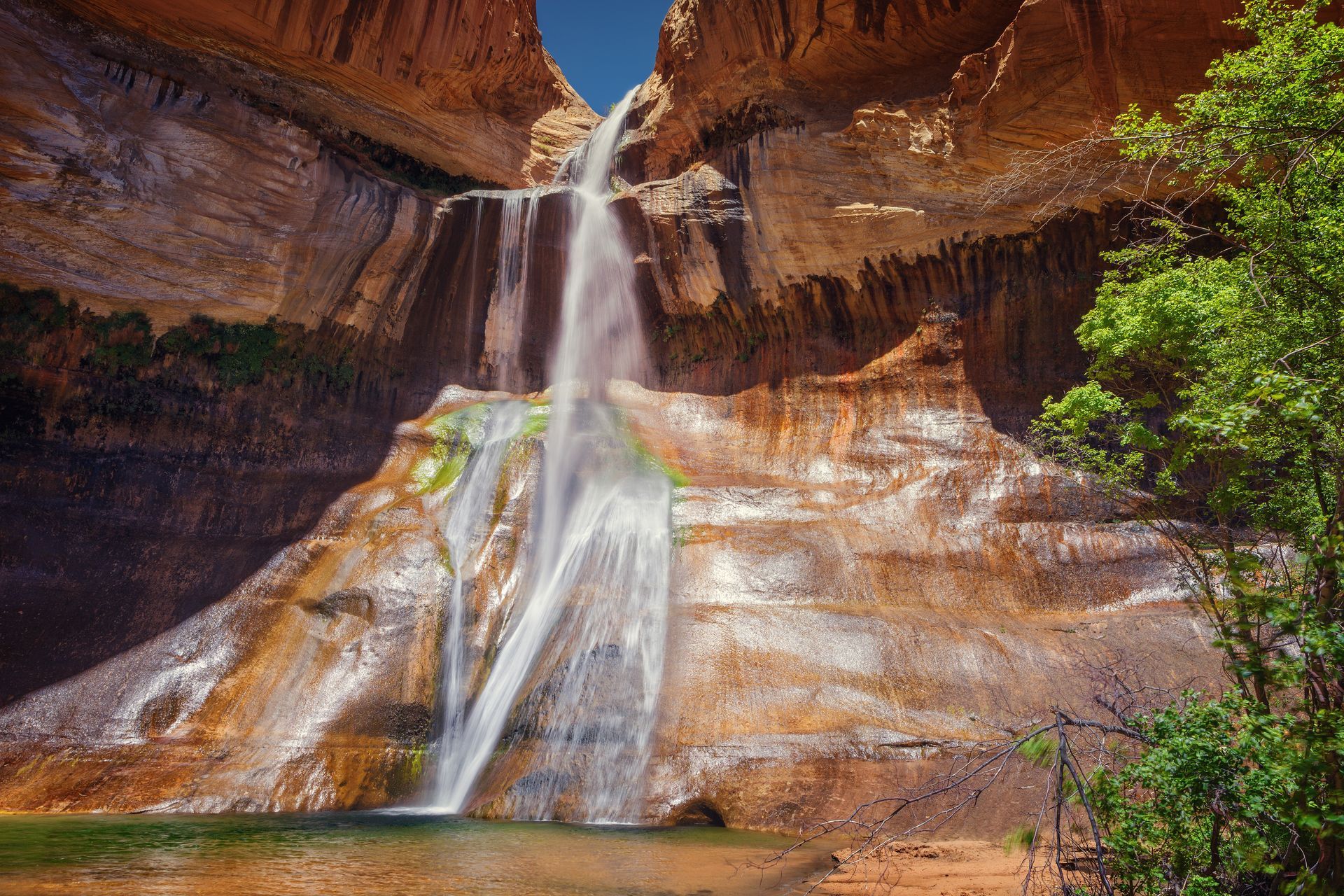
Lower Calf Creek Falls
One of the most iconic and rewarding hikes in Southern Utah, Lower Calf Creek Falls leads visitors through a spectacular desert canyon to a breathtaking 126-foot waterfall. The trail follows Calf Creek, winding past colorful sandstone cliffs, ancient Fremont cultural sites, and lush vegetation rarely found in the desert. At the end of the hike, a beautiful waterfall cascades into a cool pool, providing a refreshing destination on warm days and an unforgettable experience for hikers of all ages.
Distance: 6 miles round trip. Allow for 3 to 5 hours to complete.
Difficulty:
Moderate
- What to Bring:
- Plenty of water (at least 2 to 3 liters per person)
- Sturdy hiking shoes with good traction
- Sun protection (hat, sunglasses, and sunscreen).
- Snacks or a packed lunch.
- A camera or smartphone for photos
- Swimsuit and towel if you plan to enjoy the pool beneath the falls.
- Lightweight layers for changing weather conditions.
Safety Precautions:
- There is very little shade along much of the trail. Start early during hot weather and carry plenty of water.
- Stay on the designated trail to protect fragile desert vegetation and archaeological resources.
- Watch children carefully near cliff edges and around the waterfall pool.
- Rocks near the waterfall can be slippery.
- Swimming is permitted, but the water remains cold year round.
- Summer temperatures can be in the high 90s making dehydration and heat exhaustion serious concerns.
Getting There:
The trailhead is located between Escalante and Boulder on the Scenic Byway 12 within the Calf Creek Recreation Area. A paved parking lot, restrooms, a campground, and a picnic area are at the beginning of the trailhead. The recreation area is approximately 15 miles east of Escalante and 11 miles west of Boulder.
Peek-a-Boo and Spooky Gulch Slot Canyons
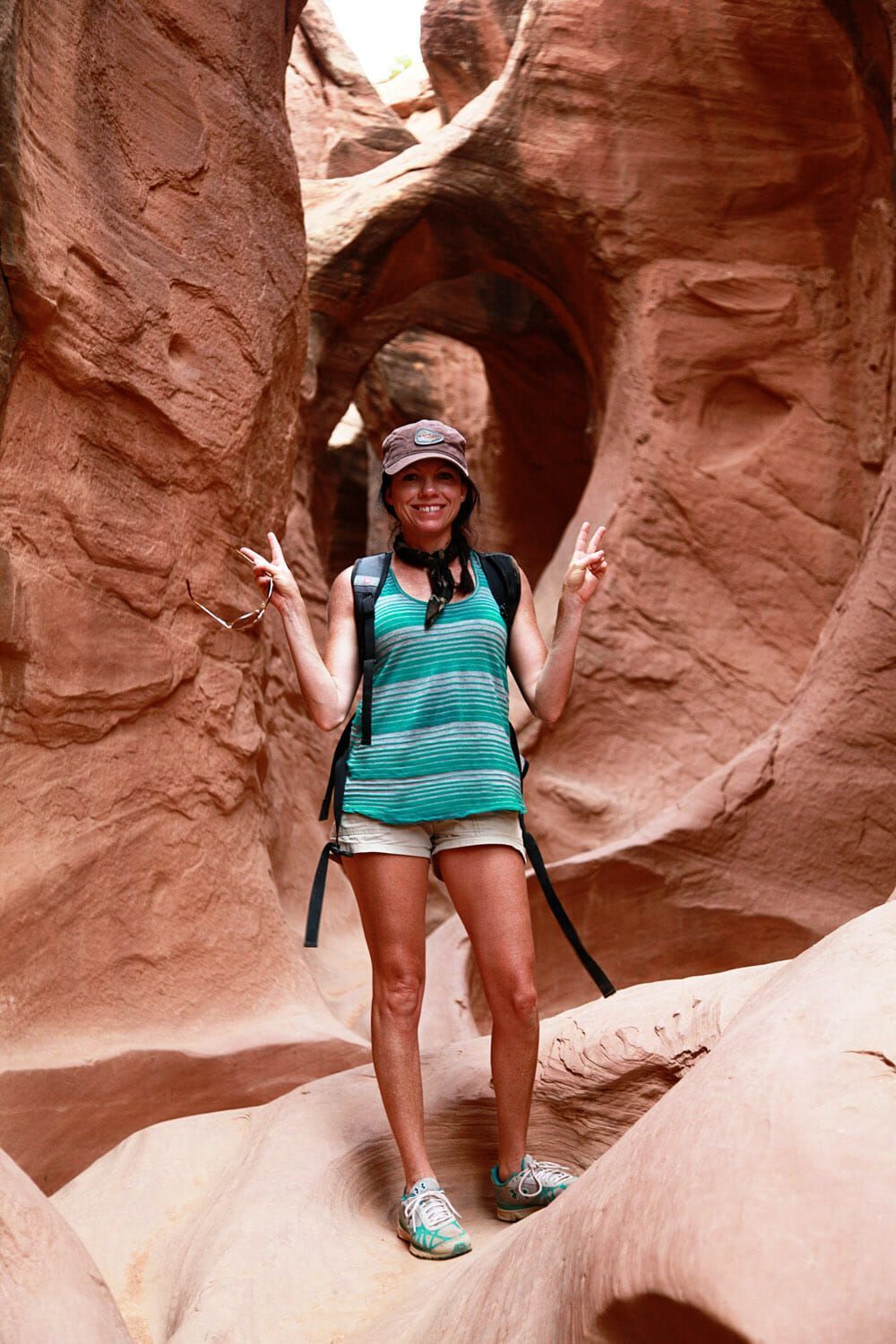
For those seeking a true slot canyon adventure, Peek-a-Boo and Spooky Gulch offer one of the most iconic hiking experiences in the Southwest. This popular loop combines two dramatically different canyons into a single, unforgettable hike. Peek-a-Boo features fun scrambling, twisting sandstone corridors, and colorful canyon walls. Spooky Gulch is famous for its incredibly narrow passages that squeeze between towering rock walls. Together they provide an authentic slot canyon experience unlike any other in the Southwest. This challenging route rewards adventurous hikers with unforgettable scenery and a deeper appreciation for how water and time shaped the landscape. This popular loop combines two dramatically different canyons into a single, unforgettable hike. Peek-a-Boo features fun scrambling, twisting sandstone corridors, and colorful canyon walls. Spooky Gulch is famous for its incredibly narrow passages that squeeze between towering rock walls. Together they provide an authentic slot canyon experience unlike any other in the Southwest.
Distance: Approximately 6-miles round trip as a loop. Allow 3 to 5 hours to complete.
Difficulty:
Moderate to Strenuous.
- What to Bring:
- Plenty of water (at least 2 to 3 liters per person)
- Sturdy hiking shoes with good traction
- Sun protection (hat, sunglasses, and sunscreen).
- Snacks or a packed lunch.
- A camera or smartphone for photos
- Swimsuit and towel if you plan to enjoy the pool beneath the falls.
- Lightweight layers for changing weather conditions.
- Downloaded trail maps or GPS navigation
Safety Precautions:
- Never enter either slot canyon if rain is forecast anywhere in the area. Flash floods can occur suddenly and are extremely dangerous.
- Peek-a-Boo requires a short, but steep scramble to enter, which may be difficult for some hikers.
- Spooky Gulch contains extremely narrow sections that may not be suitable for individuals with claustrophobia or larger body frames.
- Travel with a companion whenever possible. Let someone know your hiking plans before departing.
- Cell service is very limited or non-existent along the route.
- Road conditions on Hole-in-the-Rock Road can change rapidly after storms.
This hike is not recommended for young children, anyone uncomfortable in tight spaces, or visitors with mobility limitations.
Getting There:
The trailhead is located between Escalante and Boulder on the Scenic Byway 12 within the Calf Creek Recreation Area. A paved parking lot, restrooms, a campground, and a picnic area are at the beginning of the trailhead. The recreation area is approximately 15 miles east of Escalante and 11 miles west of Boulder.
Important Safety Information:
Never enter a slot canyon if rain is in the forecast, even if storms are many miles away. Flash floods can occur with little warning and can be extremely dangerous. Check weather conditions before your hike and avoid entering the canyon during periods of unsettled weather.
Zebra Slot Canyon
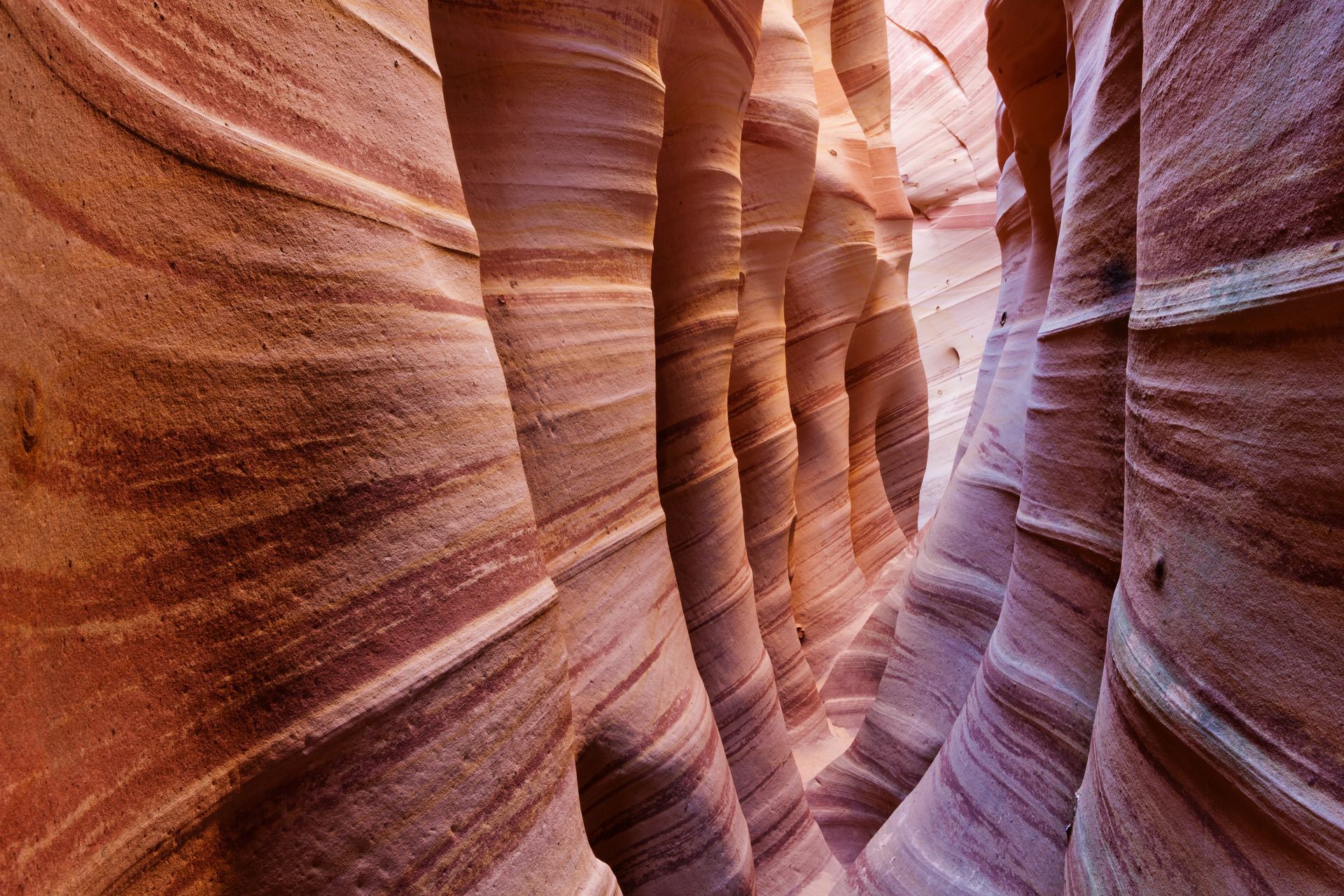
Named for its striking striped sandstone walls, Zebra Slot Canyon is one of the most photographed and recognizable slot canyons in the Escalante region. This adventurous hike begins with a scenic trek across open desert terrain before narrowing into a stunning passage of swirling red, pink, orange, and cream-colored rock. In some sections, the canyon becomes remarkably narrow, creating an exciting and unforgettable experience for adventurous hikers.
Though the hike is relatively short, visitors should prepare for uneven terrain, occasional water, and tight spaces. While the distance is manageable for many hikers, the route includes uneven slickrock, sandy washes, and very tight canyon sections that require scrambling and squeezing through narrow passages. Zebra Slot Canyons in not recommended for those who are uncomfortable in confined spaces.
Distance: Approximately 5.3 miles round trip. Allow 3 to 4 hours to complete.
Difficulty: Moderate to Strenuous
- What to Bring:
- Plenty of water (at least 2 liters per person)
- Sturdy hiking shoes with good traction
- Sun protection (hat, sunglasses, and sunscreen).
- Snacks or a packed lunch.
- A camera or smartphone for photos
- Downloaded trail map or GPS navigation.
- Lightweight layers for changing weather conditions.
Safety Precautions:
- Never enter either slot canyon if rain is forecast anywhere in the area. Flash floods can occur suddenly and are extremely dangerous.
- Water and mud are common in the narrow canyon section, especially after recent storms.
- The canyon narrows significantly may not be suitable for individuals with claustrophobia or larger body frames.
- Use caution on slickrock and uneven terrain.
- Travel with a companion whenever possible. Let someone know your hiking plans before departing.
- Cell service is very limited or non-existent along the route.
- Road conditions on Hole-in-the-Rock Road can change rapidly after storms.
This hike is not recommended for young children, anyone uncomfortable in tight spaces, or visitors with mobility limitations.
Getting There:
The trailhead is located approximately 7.8 miles down Hole-in-the-Rock Road, southeast of Escalante. Hole-in-the-Rock Road is a graded, dirt road that is generally suitable for most vehicles in dry conditions, but can become muddy and impassable after rain. The trail begins from a small parking area on the east side of the road.
Important Safety Information:
Never enter a slot canyon if rain is in the forecast, even if storms are many miles away. Flash floods can occur with little warning and can be extremely dangerous. Check weather conditions before your hike and avoid entering the canyon during periods of unsettled weather.
Willis Creek Slot Canyon
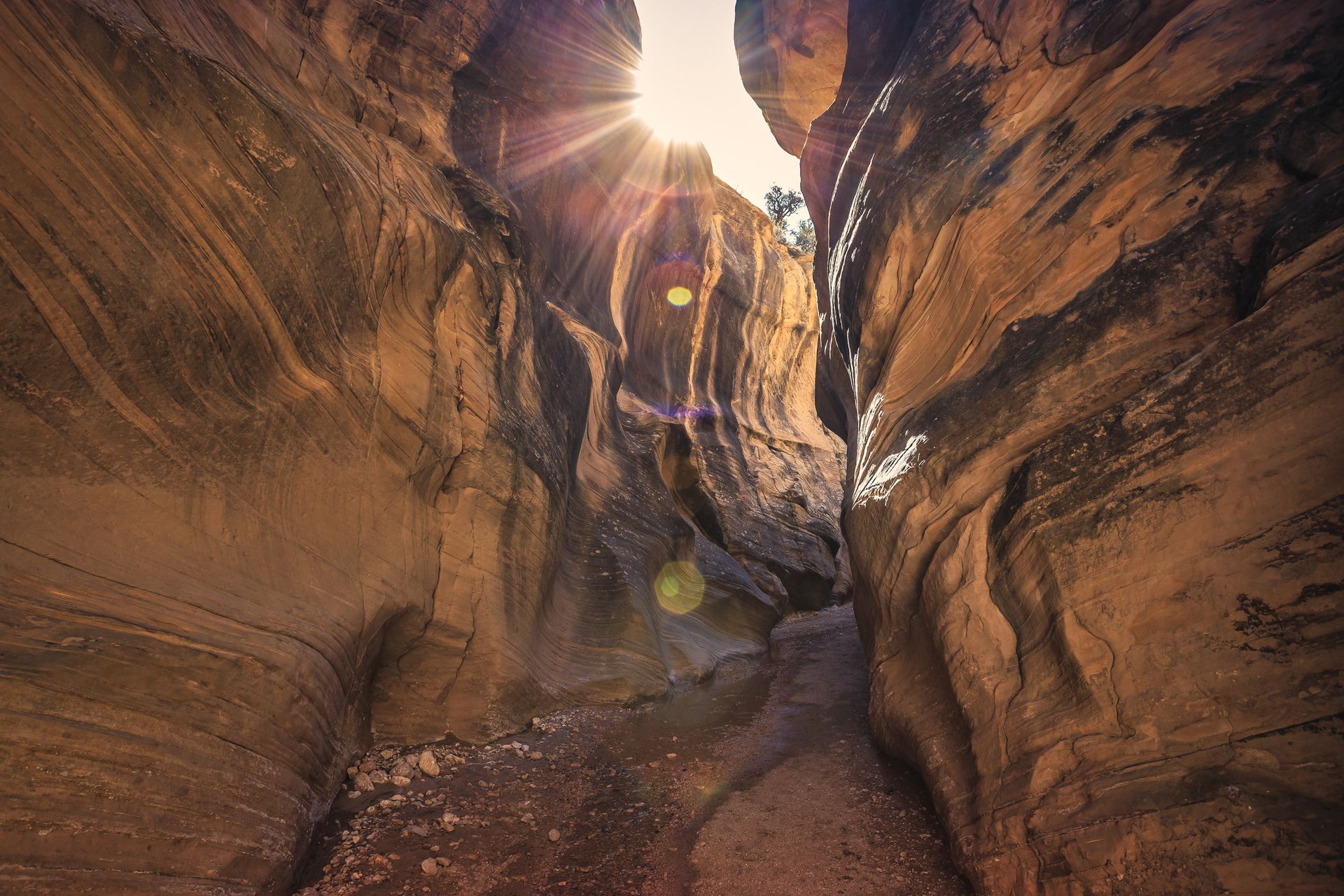
Willis Creek Slot Canyon offers one of the most accessible and family-friendly slot canyon experiences in Southern Utah. Unlike many slot canyons that require steep climbs or technical navigation, Willis Creek follows a gentle stream through towering sandstone walls, creating a beautiful and easy adventure for visitors of all ages. Along the way, you'll encounter narrow passages, colorful rock formations, small cascades, and peaceful canyon scenery that make this hike a favorite among families and photographers. Willis Creek Slot Canyon is 4 to 5 miles round trip (you can hike as far as you wish and turn around). Allow for 2 to 3 hours to complete the hike. Willis Creek Slot Canyon is an excellent choice for visitors looking to experience the beauty of a Utah slot canyon without the strenuous hiking often associated with more challenging routes.
Distance: 4 to 5 miles round trip. Allow 2 to 3 hours to complete.
Difficulty: Easy
What to Bring:
- Plenty of water (at least 1 to 2 liters per person)
- Comfortable hiking shoes or water-resistant footwear.
- Sun protection (hat, sunglasses, sunscreen etc).
- Light snacks or packed lunch.
- Camera or smartphone.
- Light jacket depending on weather.
Safety Precautions:
- Expect to cross the creek multiple times and get your feet wet.
- Avoid the canyon if rain is forecast anywhere in the drainage area due to flash flood risk.
- Be aware that rocks near the water can be slippery.
- Cell service is limited, so dowload maps before leaving town.
Getting There:
The trailhead is located along Skutumpah Road, about 15 miles south of Cannonville, Utah. From Cannonville, head south on Kodachrome Road, which eventually becomes Skutumpah Road. The road is mostly well-graded dirt and typically passable for most vehicles in dry conditions, but it can become muddy and difficult after rain. There is a small, unmarked parking area near a cattle guard where the trail begins. GPS coordinates for the trailhead are approximately 37.50 degrees N, 112.2205 degrees W.
Big Horn Slot Canyon
Big Horn Slot Canyon is one of the most accessible and enjoyable slot canyon adventures near Escalante. Often paired with nearby Zebra Slot Canyon, Big Horn offers a less restrictive experience with wider passages, beautiful sandstone walls, and plenty of opportunities to explore the unique geology of the Grand Staircase-Escalante National Monument. The canyon's twisting corridors, sculpted rock formations, and ever-changing colors make it a favorite for families, photographers, and hikers looking to experience a slot canyon without the extremely tight squeezes found in some nearby canyons.
Distance: Approximately 4 to 5 miles round trip. Allow 2 to 4 hours to complete.
Difficulty: Moderate
What to Bring:
- Plenty of water (at least 2 liters per person)
- Sturdy hiking shoes with good traction
- Sun protection (hat, sunglasses, and sunscreen).
- Snacks or a packed lunch.
- Camera or Smartphone.
- Downloaded trail map or GPS navigation.
- Lightweight layers for changing weather conditions.
Safety Precautions:
- Summer temperatures can be extremely hot; start early and carry extra water.
- Stay on designated trails to protect fragile desert soils and vegetation.
- Watch for wildlife, including rattlesnakes during warmer months.
- Cell service may be limited in parts of the park.
- Afternoon thunderstorms can develop quickly during monsoon season.
Getting There:
Just 30 minutes from Slot Canyons Inn, Kodachrome Basin offers breathtaking scenery, fewer crowds than many nearby parks, and countless opportunities to experience the beauty and serenity of Southern Utah's canyon country.
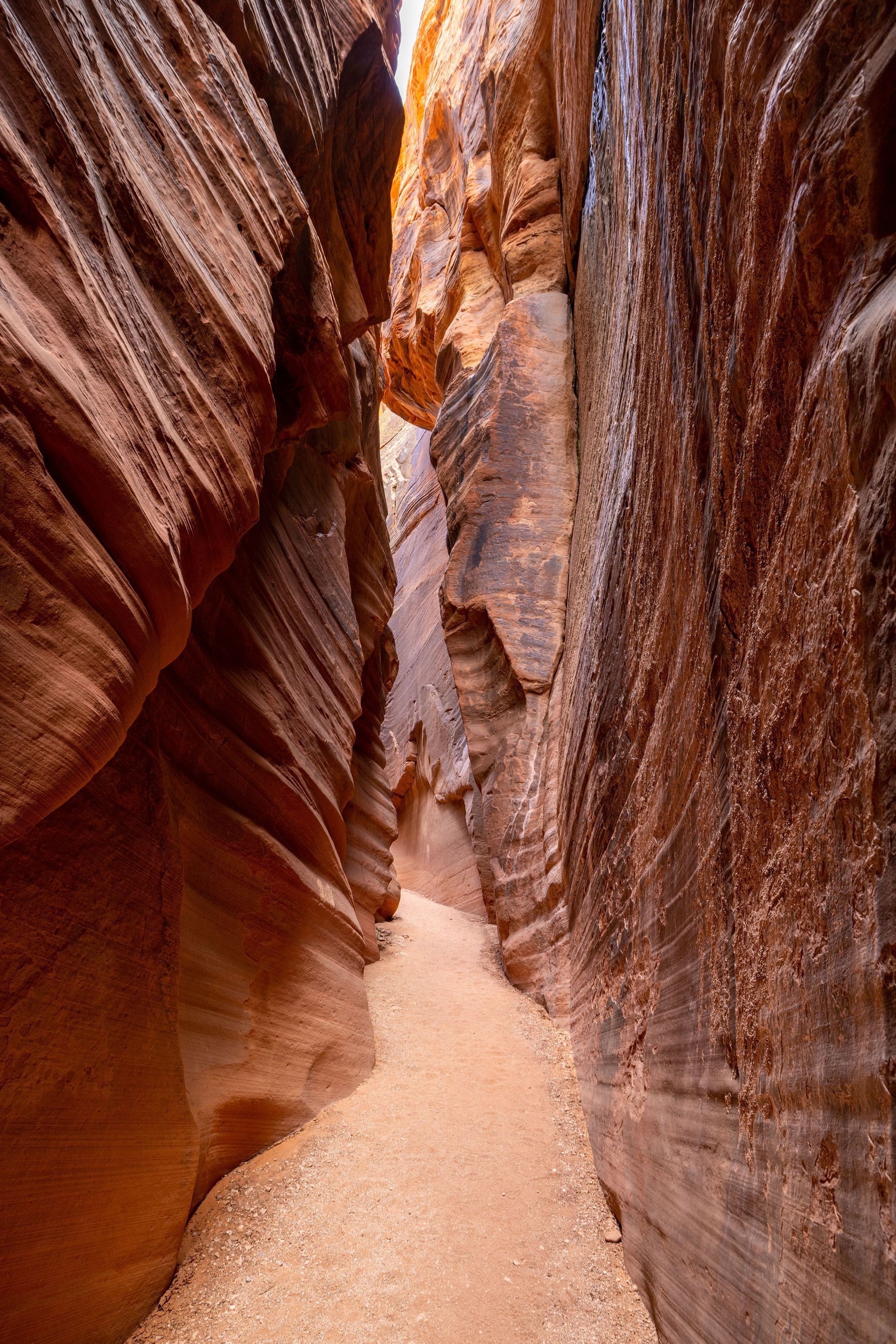
Kodachrome Basin State Park
Known for its colorful sandstone spires, sweeping desert vistas, and remarkable geologic formations, Kodachrome Basin State Park is one of Southern Utah's hidden gems. Named after the vibrant Kodak film, the park features more than 60 towering sandstone chimneys called sedimentary pipes, creating a landscape unlike anywhere else in the Southwest. Scenic drives, hiking trails, wildlife viewing, photography, horseback riding, and dark night skies make Kodachrome Basin a wonderful destination for visitors seeking both adventure and tranquility.
Distance: Multiple trail options ranging from short walks to hikes of 6+ miles. Allow for 2 hours to a full-day, depending on activities.
Difficulty: Easy to Moderate
What to Bring:
- Plenty of water (at least 2 to 3 liters).
- Sturdy walking or hiking shoes.
- Sun protection (hat, sunglasses, and sunscreen).
- Snacks or a picnic lunch.
- Camera or binoculars.
- Layers for changing weather conditions.
Safety Precautions:
- Summer temperatures can be extremely hot; start early and carry extra water.
- Stay on designated trails to protect fragile desert soils and vegetation.
- Watch for wildlife, including rattlesnakes during warmer months.
- Cell service may be limited in parts of the park.
- Afternoon thunderstorms can develop quickly during monsoon season.
Getting There:
Just 30 minutes from Slot Canyons Inn, Kodachrome Basin offers breathtaking scenery, fewer crowds than many nearby parks, and countless opportunities to experience the beauty and serenity of Southern Utah's canyon country.
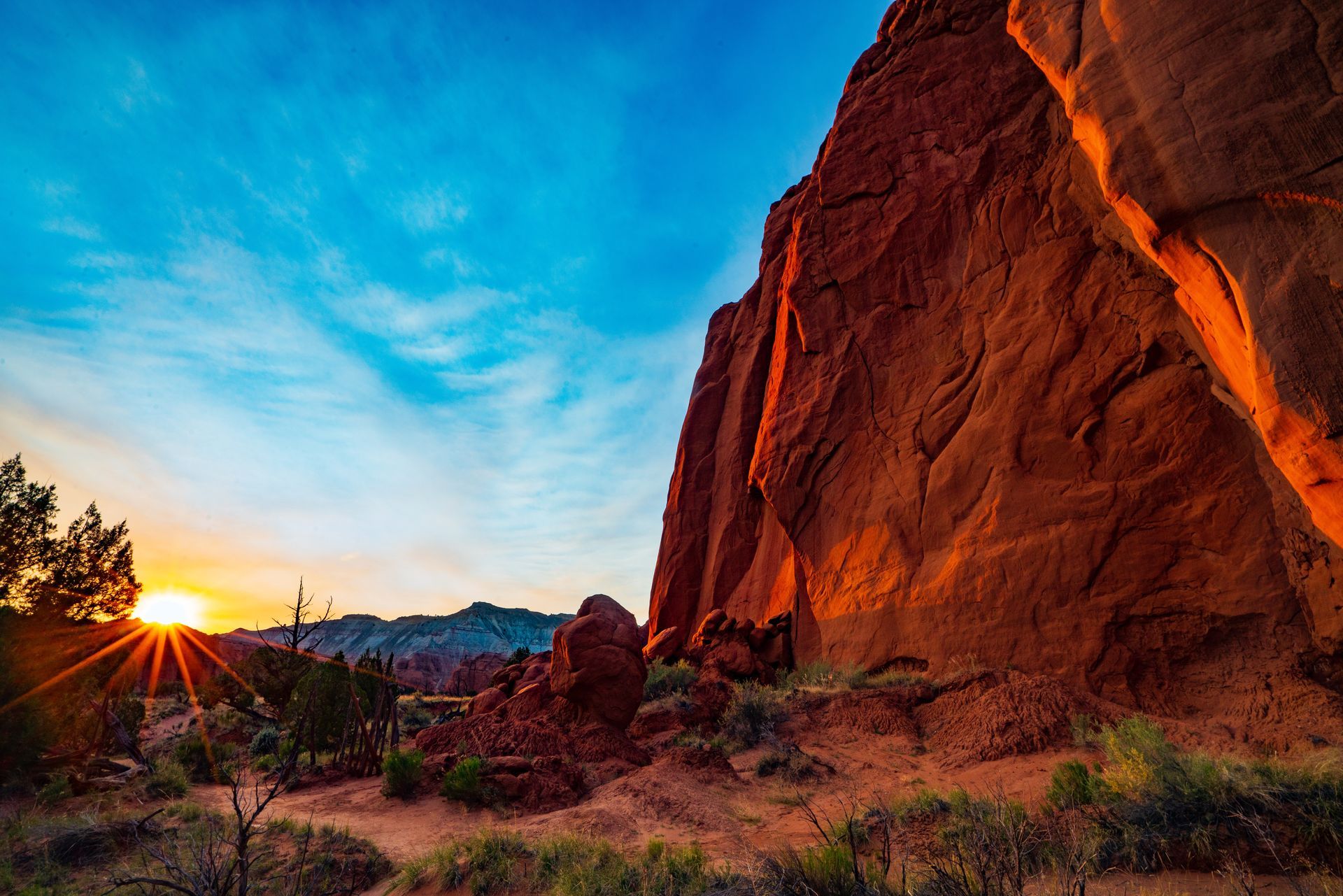
Devil's Garden
Devil's Garden is one of the most fascinating and photogenic destinations in Grand Staircase-Escalante National Monument. This remarkable natural area features. a whimsical landscape of sandstone arches, towering hoodoos, fins, and sculpted rock formations shaped by millions of years of wind and water erosion. Visitors can wander among these unique formations, discovering hidden passageways, natural arches, and breathtaking desert vistas around every turn. The open nature of the area allows exploration at your own pace, making it a favorite destination for photographers, families, and adventurers alike.
Distance: Variable; most visitors walk 1 to 2 miles exploring the area. Allow 1 to 3 hours to complete.
Difficulty: Easy
What to Bring:
- Plenty of water (at least 2 to 3 liters).
- Sturdy walking or hiking shoes.
- Sun protection (hat, sunglasses, and sunscreen).
- Camera or Smartphone.
- Snacks or a picnic lunch.
- Layers for changing weather conditions.
Safety Precautions:
- There are no designated trails through much of the area, so watch your footing on uneven sandstone surfaces.
- Stay back fro cliff edges and elevated rock formations.
- Summer temperatures can be extremely hot. Carry plenty of water and avoid the hottest part of the day.
- Cell service is limited or unavailable.
- Do not climb on delicate archs or fragile rock formations.
- Leave all natural features undisturbed and practice Leave No Trace principles.
Getting There:
From Escalante, travel southeast on Hole-in-the-Rock Road for approximately 12 miles. Turn left onto the signed Devil's Garden access road and continue a short distance to the parking area. Hole-in-the-Rock Road is a graded dirt road that is generally suitable for most vehicles in dry conditions but can become muddy and difficult to travel after rain.
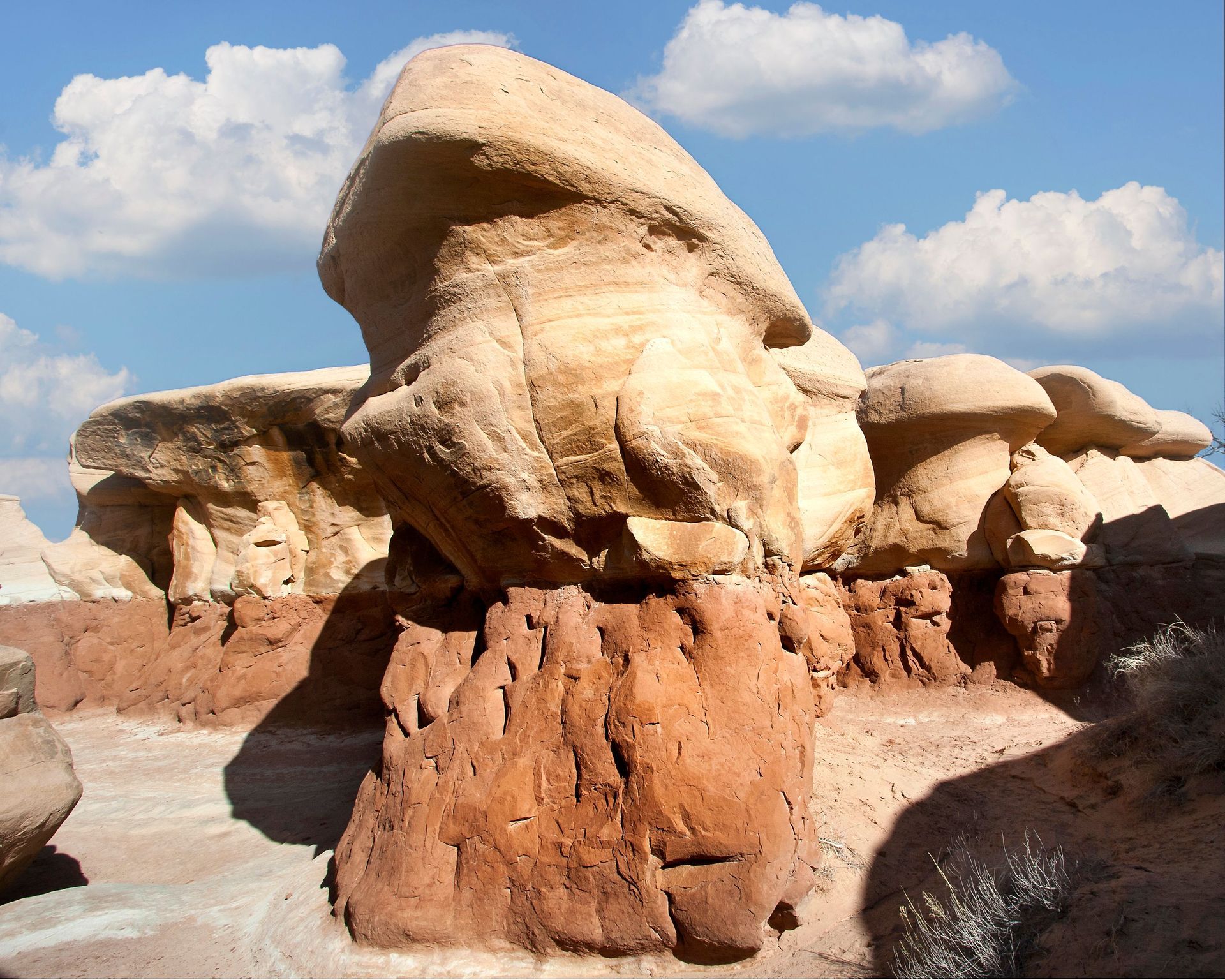
Coyote Gulch
Coyote Gulch is widely considered one of the crown jewels of Grand Staircase-Escalante National Monument. This spectacular desert canyon features towering sandstone cliffs, natural arches, lush streamside vegetation, waterfalls, and some of the most breathtaking scenery in the American Southwest. The gulch offers an unforgettable backcountry experience, with crystal-clear water flowing year-round beneath soaring canyon walls. Highlights include Jacob Hamblin Arch, Coyote Natural Bridge, Cliff Arch, and countless opportunities for photography and exploration.
Because multiple access points and routes lead into Coyote Gulch, visitors can choose anything from a challenging day hike to a multi-day backpacking adventure. The most common day-hike access is via Hurricane Wash.
Distance: Typically 11 to 14 miles round trip for a day hike. Allow 8 to 12 hours for a day hike; many visitors choose to backpack overnight. If you choose to backpack overnight you must get an overnight camping permit at the Escalante Interagency Visitor Center (755 W Main Street, Escalante, UT).
Difficulty: Strenuous, Recommended for Experienced Hikers and Backpackers
What to Bring:
- 3 to 4 Liters of water per person.
- Sturdy hiking shoes or boots with good traction.
- Trekking Poles
- Sun protection (hat, sunglasses, and sunscreen).
- High energy snacks and a packed lunch. Prepare more food if camping overnight.
- Camera or Smartphone.
- Downloaded trail maps or GPS navigation.
- Lightweight layers for changing weather conditions.
- Dry bags or waterproof protection for electronics
- First-aid kit
- Head-lamp in case hike takes longer than expected
Safety Precautions:
- This is a remote, backcountry hike with no services and limited or non-existent cell service.
- Never enter narrow canyon section if rain is forecast anywhere in the drainage area due to flash flood risk.
- Stream crossing are common and feet will likely get wet.
- Be prepared for deep sand, uneven terrain, and long distances.
- Inform someone of your hiking plans and expected return time.
- Navigation can be challenging, especially when entering or exiting the canyon.
- Backpackers should be familiar with "Leave No Trace" principles and current permit requirements.
Getting There:
The most popular trailhead is Hurricane Wash, located approximately 33 miles down Hole-in-the-Rock Road from Escalante. Hole-in-the-Rock Road is a graded dirt road that is generally passable in dry conditions, but can become muddy and impassable after rain. Other access routes include Red Well, Fortymile Ridge, and Crack-in-the-Wall, each offering different levels of difficulty and adventure.
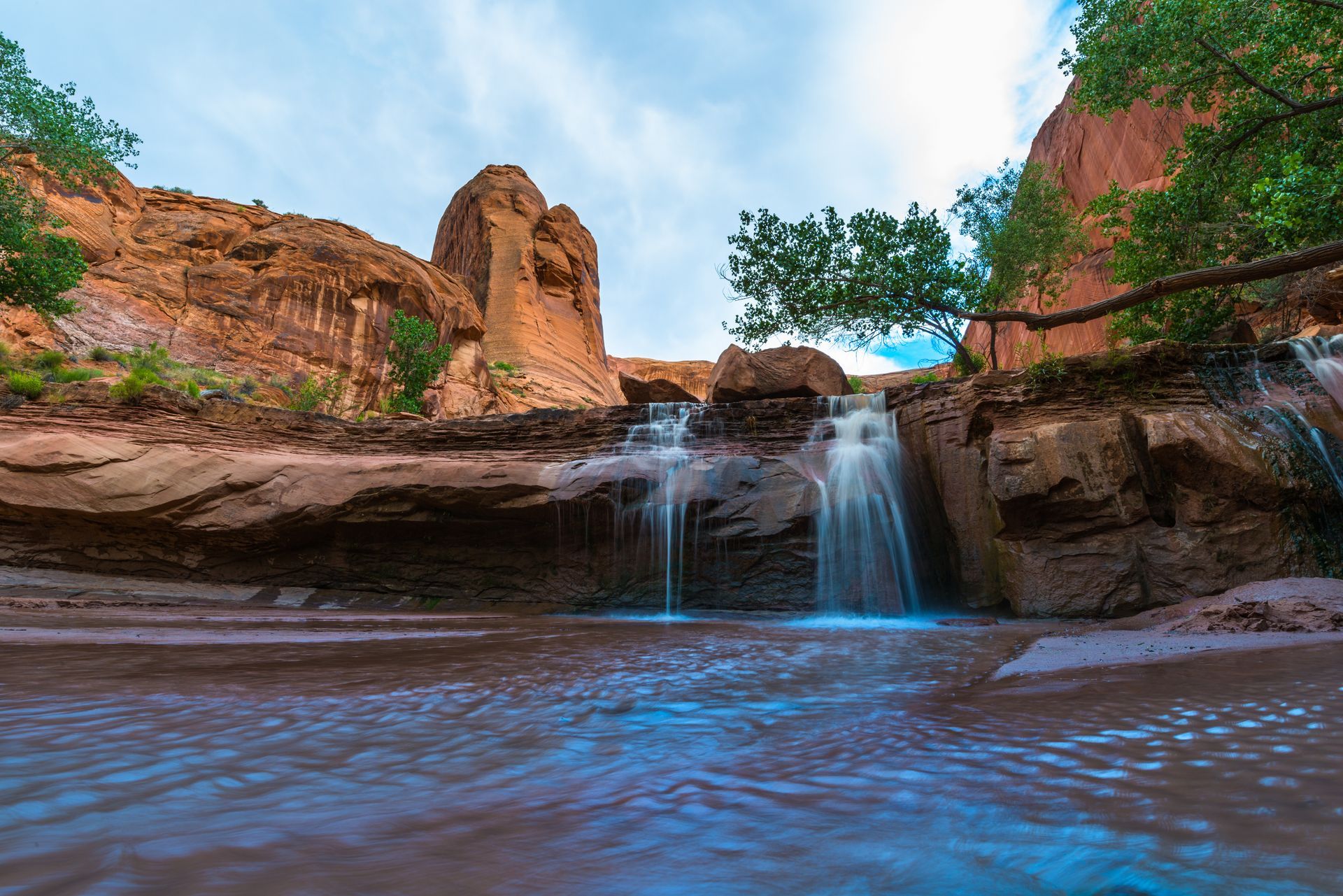
Golden cathedral
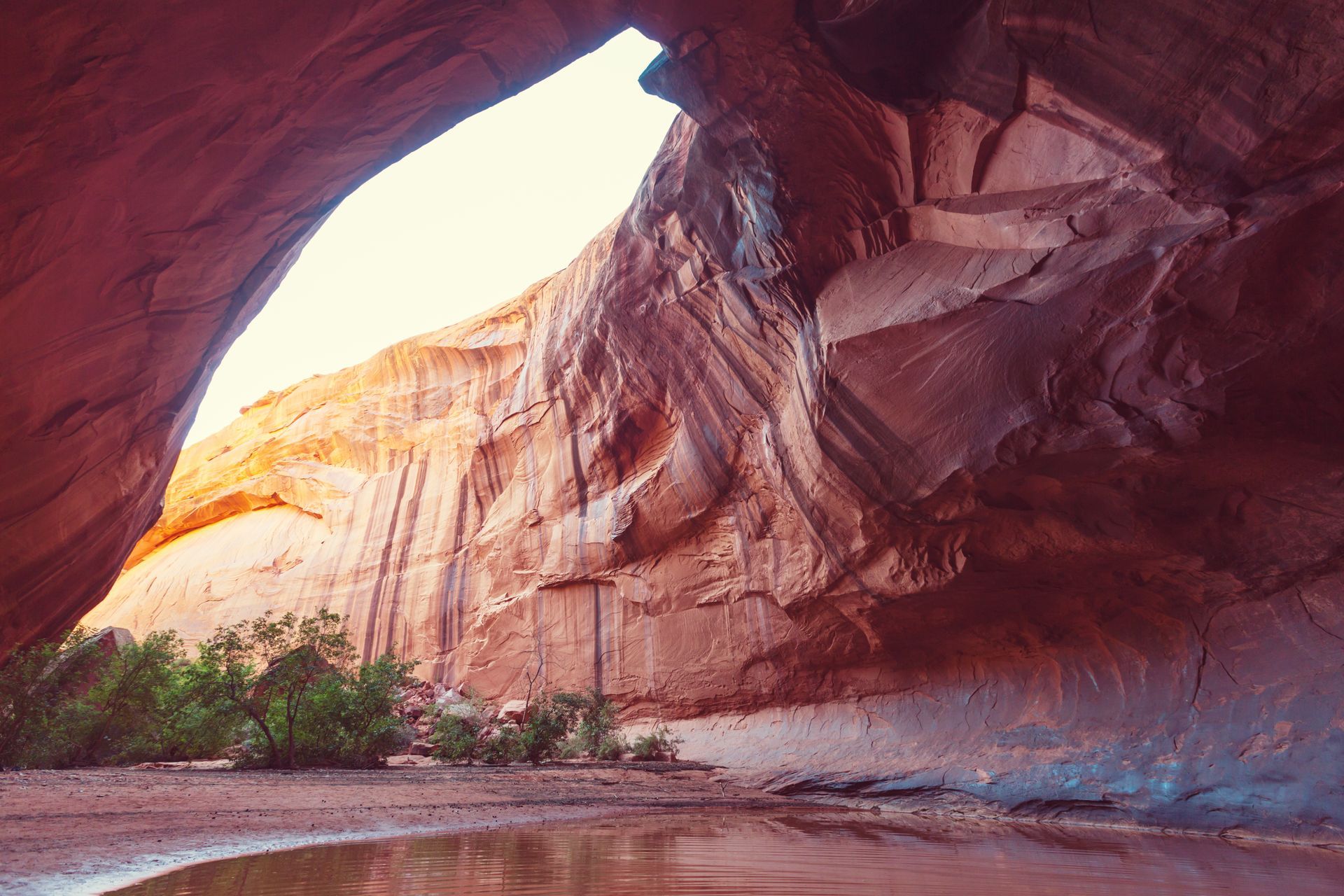
Hidden deep within the Escalante backcountry, Golden Cathedral is one of the area's most spectacular and rewarding destinations. Located in Neon Canyon, this massive sandstone alcove is famous for three natural openings in its ceiling that allow sunlight to stream into the chamber, creating a beautiful golden glow against the canyon walls.
Reaching Golden Cathedral is part of the adventure. The route crosses remote desert terrain before descending toward the Escalante River, which hikers must cross to reach Neon Canyon. Once inside the canyon, a relatively short walk leads to the impressive cathedral-like alcove. Golden Cathedral is an extraordinary destination, but it should not be considered a casual, sightseeing hike. For experienced hikers prepared for navigation, river crossings, desert exposure, and a long day in the backcountry, the reward is one of the most remarkable natural settings in the Escalante region.
Distance: Approximately 9 to 10 miles round trip, depending on the route and parking location. Allow at least 6 to 9 hours to complete.
Difficulty: Strenuous, Recommended for Experienced Hikers
What to Bring:
- 3 to 4 liters of water per person
- Sturdy hiking shoes or boots with excellent traction
- Water shoes or footwear suitable for crossing the Escalante River
- Downloaded offline map and GPS navigation
- Sun Protection (hat, sunglasses, and sunscreen)
- High energy snacks and a substantial lunch
- First-aid kit
- Lightweight layers for changing temperatures
- Trekking Poles
- Headlamp in case the hike takes longer than expected
Safety Precautions:
- Navigation is one of the biggest challenges. Much of the route is unmarked, and hikers should be comfortable with backcountry route-finding and GPS navigation.
- The Escalante River must typically be crossed. Water depth and current vary considerably depending on recent weather and seasonal conditions. DO NOT attempt a river crossing if the water is too deep or moving too swiftly.
- Neon Canyon and the surrounding drainage are subject to flash flooding. Never enter when thunderstorms or heavy rain are forecast in the surrounding area or upstream.
- The route includes steep slickrock and loose terrain. Good footwear and careful footing are essential.
- There is little shade during much of the approach, and summer heat can be dangerous. Carry plenty of water and consider an early start.
- Cell service is generally unavailable. Tell someone where you are going and when you expect to return.
- Avoid relying solely on your phone for navigation. Download maps before leaving Escalante and carry a backup power source.
- Check current weather, road, river, and trail conditions before setting out. Check with the Escalante Interagency Visitor Center (755 W Main Street, Escalante, UT) to confirm conditions.
Getting There:
From Escalante, travel southeast on Hole-in-the-Rock Road for approximately 16 miles, then turn onto Egypt Road and continue toward the Egypt trailhead area. Egypt Road is considerably rougher than Hole-in-the-Rock Road, and a high-clearance vehicle is strongly recommended. Road conditions can deteriorate quickly after rain, and the road may become impassable.
From the trailhead, hikers travel cross-country through the Egypt Bench toward the Escalante River. After descending to and crossing the river, continue to the mouth of Neon Canyon and follow the canyon to Golden Cathedral. Because the route is largely unmarked and remote, visitors should download a detailed route map and GPS coordinates before leaving Escalante rather than relying only on written directions.
Escalante Natural Bridge
Escalante Natural Bridge is a beautiful and rewarding hike that follows the Escalante River through a peaceful canyon surrounded by towering sandstone walls. The highlight is an impressive natural sandstone bridge rising above the canyon floor, but the journey itself - with river crossings, cottonwood trees, colorful cliffs, and quiet canyon scenery - is equally memorable.
Compared with some of Escalante's more demanding backcountry adventures, this hike is relatively approachable, making it a wonderful choice for visitors who want to experience the Escalante River corridor without committing to an all-day strenuous hike. Escalante Natural Bridge is a wonderful half-day adventure for guests looking for beautiful canyon scenery, flowing water, and an impressive natural formation without the technical challenges of the area's more difficult slot canyon hikes.
Distance: Approximately 4 miles round trip.
Difficulty: Easy to Moderate. Allow approximately 2 to 3 hours
What to Bring:
- 1 to 2 liters of water per person
- Sturdy hiking shoes or water-friendly hiking footwear
- Trekking poles
- Sun protection (hat, sunglasses, and sunscreen)
- Snacks
- Camera or Smartphone
- Lightweight layers depending on the season
- Downloaded trail map
Safety Precautions:
- The trail requires multiple crossings of the Escalante River, so expect to get your feet wet. Water levels and currents vary with weather and seasonal conditions.
- Do not attempt a river crossing if the water is unusally high, deep, or moving too swiftly.
- Use caution on wet rocks, muddy banks, and uneven terrain.
- Check the weather before hiking. Heavy rain and thunderstorms can cause rapidly changing water conditions and flash flooding within the Escalante River drainage.
- Summer temperatures can become very hot. Carry plenty of water and consider hiking during the cooler morning hours.
- Cell service is limited or non-existent in the canyon, so download maps before leaving Escalante.
- Watch children carefully around the river and near steep or rocky areas.
Getting There:
From Slot Canyons Inn, travel east through Escalante on Scenic Byway 12 toward Boulder. Continue approximately 14 miles from Escalante to the Escalante River Trailhead, located near the highway bridge where Highway 12 crosses the Escalante River.
Look for the trailhead and parking area along Highway 12 near the river crossing. From the trailhead, follow the Escalante River Trail upstream. The route follows and crosses the river several times before reaching the Escalante Natural Bridge.
Unlike many of the area's backcountry attractions, the trailhead is accessed directly from paved Scenic Byway 12, so visitors do not need to travel miles down a dirt road to enjoy this hike.
Upper Calf Creek Falls
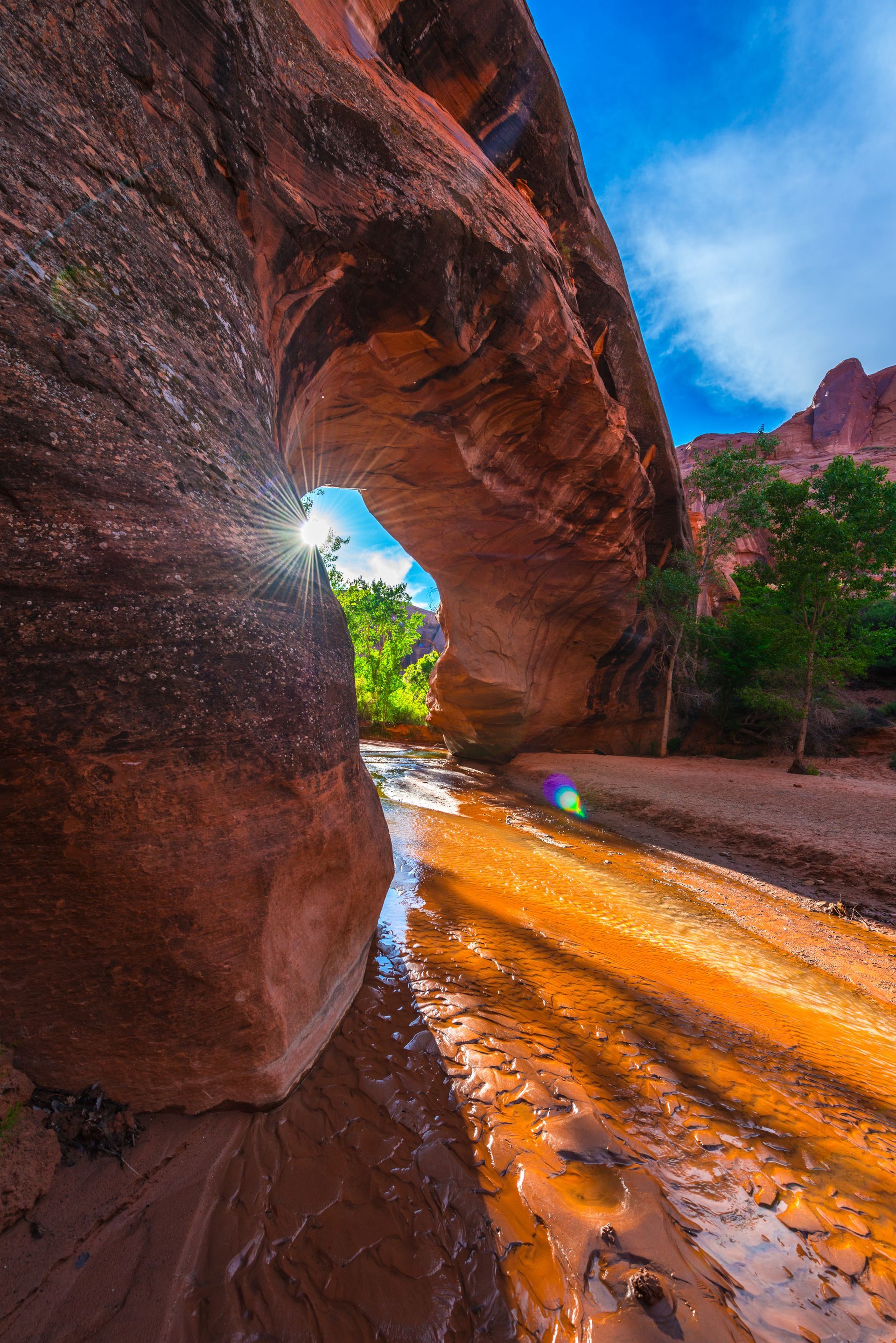
Upper Calf Creek Falls offers a quieter and more adventurous alternative to the better-known Lower Calf Creek Falls. The trail descends across open slickrock into the Calf Creek canyon, leading to a beautiful waterfall cascading approximately 88 feet into a clear pool surrounded by colorful sandstone cliffs.
The hike is considerably shorter than Lower Calf Creek Falls, but don't let the mileage fool you—the steep slickrock descent makes the return climb challenging. Along the way, hikers are rewarded with sweeping views across the canyon country and a peaceful waterfall setting that often sees fewer visitors than the lower falls.
Distance: Approximately 2 miles round trip.
Difficulty: Moderate to Strenuous. Allow approximately 2 to 3 hours.
What to Bring:
- Bring at least 1 to 2 liters of water per person; more during hot weather
- Sturdy hiking shoes or boots with excellent traction
- Sun protection (hat, sunglasses, and sunscreen)
- Snacks
- Camera or Smartphone
- Lightweight layers for changing weather
- Downloaded offline trail map or GPS navigation
- Trekking poles can be helpful on steep sections
Safety Precautions:
- The route includes a steep descent over exposed slickrock, followed by a strenuous uphill climb on the return. Good footwear with traction is important.
- Follow the rock cairns carefully. The route crosses open slickrock and can be difficult to follow in places.
- Avoid approaching exposed cliff edges and supervise children closely.
- The slickrock can become extremely slippery when wet. Avoid hiking during rain, snow, or icy conditions.
- There is very little shade along the exposed portion of the trail. During summer, hike early and carry plenty of water.
- Rocks around the waterfall and pool may be slippery.
- Check the weather before departing. Thunderstorms and heavy rain can create dangerous conditions in canyon country.
- Cell service may be limited or non-existent, so download your map before leaving Escalante.
Getting There:
From Escalante, travel east on Scenic Byway 12 toward Boulder. Continue past the entrance to Lower Calf Creek Falls and climb the dramatic section of Highway 12 toward Boulder.
The Upper Calf Creek Falls Trailhead is located off Highway 12 between Escalante and Boulder, near mile marker 81. Look for the signed turnoff and parking area on the west side of the highway. The trailhead is approximately 25 miles from Escalante.
The trail begins by descending across slickrock toward Calf Creek. Follow the established route and rock cairns carefully as you make your way down into the canyon. Upper Calf Creek Falls is an excellent choice for adventurous hikers looking for a shorter excursion with a little more challenge. The combination of sweeping slickrock views, beautiful canyon scenery, and the secluded waterfall makes it one of the Escalante area's hidden gems.
Escalante Petrified Forest State Park
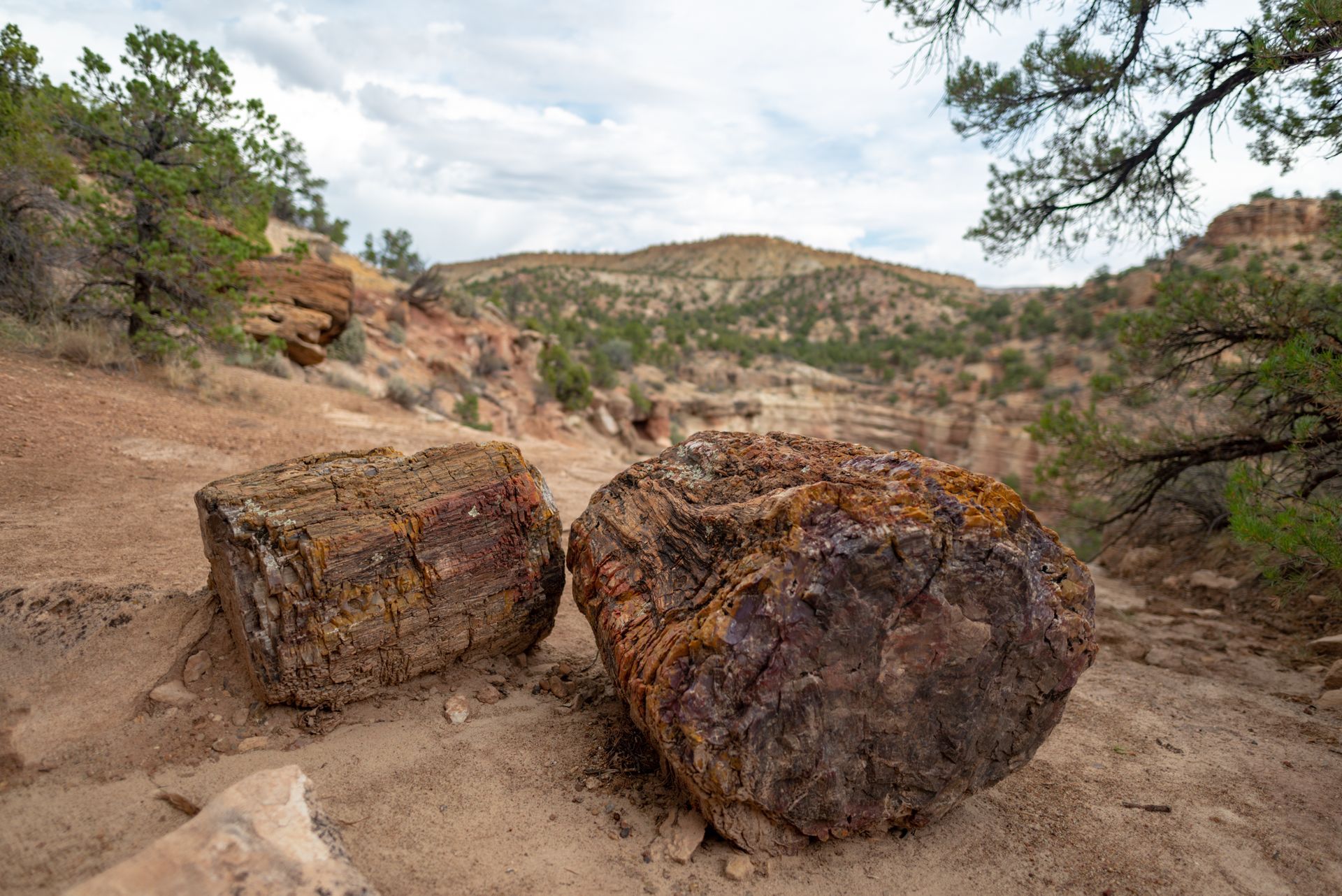
Just minutes from downtown Escalante, Escalante Petrified Forest State Park offers visitors a fascinating look into Utah's prehistoric past. The park is home to colorful pieces of petrified wood that are approximately 135 million years old, scattered among rolling hills overlooking the blue waters of the Wide Hollow Reservoir.
The main trail climbs to the top of a mesa where hikers can see large pieces of petrified wood in shades of red, orange, yellow, white, and black. Beautiful views across the surrounding desert and reservoir make the hike worthwhile even beyond its remarkable geology.
For visitors wanting a little more adventure, the Sleeping Rainbow Trail branches from the main loop and travels through a rougher terrain where even more colorful petrified wood can be seen.
Distance: Approximately 1 mile for the Petrified Forest Trail Loop; about 1.75 miles when combined with the Sleeping Rainbows Trail.
Difficulty: Moderate - The main loop involves a fairly steep climb to the mesa, but it is manageable for most active visitors. The Sleeping Rainbows Trail is more strenuous, with steeper, rockier, and less even terrain. Allow approximately 1 to 2 hours.
What to Bring:
- Water
- Comfortable hiking shoes or boots with good traction.
- Sun protection (hat, sunglasses, and sunscreen)
- Camera or Smartphone
Light jacket or layers during cooler months - Binoculars for enjoying the surrounding scenery and wildlife.
Safety Precautions:
- The initial climb is steep and exposed to the sun, so take your time and carry water.
- Summer temperatures can become very hot. Morning or evening hikes are more comfortable during the hottest months.
- The Sleeping Rainbows Trail has steep, rocky sections, and requires more careful footing.
- Stay on established trails and supervise children around steep slopes and rocky areas.
- Watch for rattlesnakes and other desert wildlife particularly during warmer months.
- Please do not collect or remove petrified wood. It is protected within the state park and should remain for future visitors to enjoy.
- Check current park and trail conditions before beginning your hike.
Getting There:
From Slot Canyons Inn, travel toward Escalante on Scenic Byway 12. Turn North onto Reservoir Road and follow signs for Escalante Petrified Forest State Park. It's approximately 1.5 miles from Slot Canyons Inn, making it one of the easiest attractions in the area to reach. The road is paved and parking, restrooms, picnic areas, and other facilities are available.
Because Escalante Petrified Forest State Park is so close, it's a wonderful choice for guests who have only a few hours available, families looking for a shorter adventure, or anyone wanting a relaxing activity after tackling one of the area's more strenuous hikes.
Bryce Canyon National Park
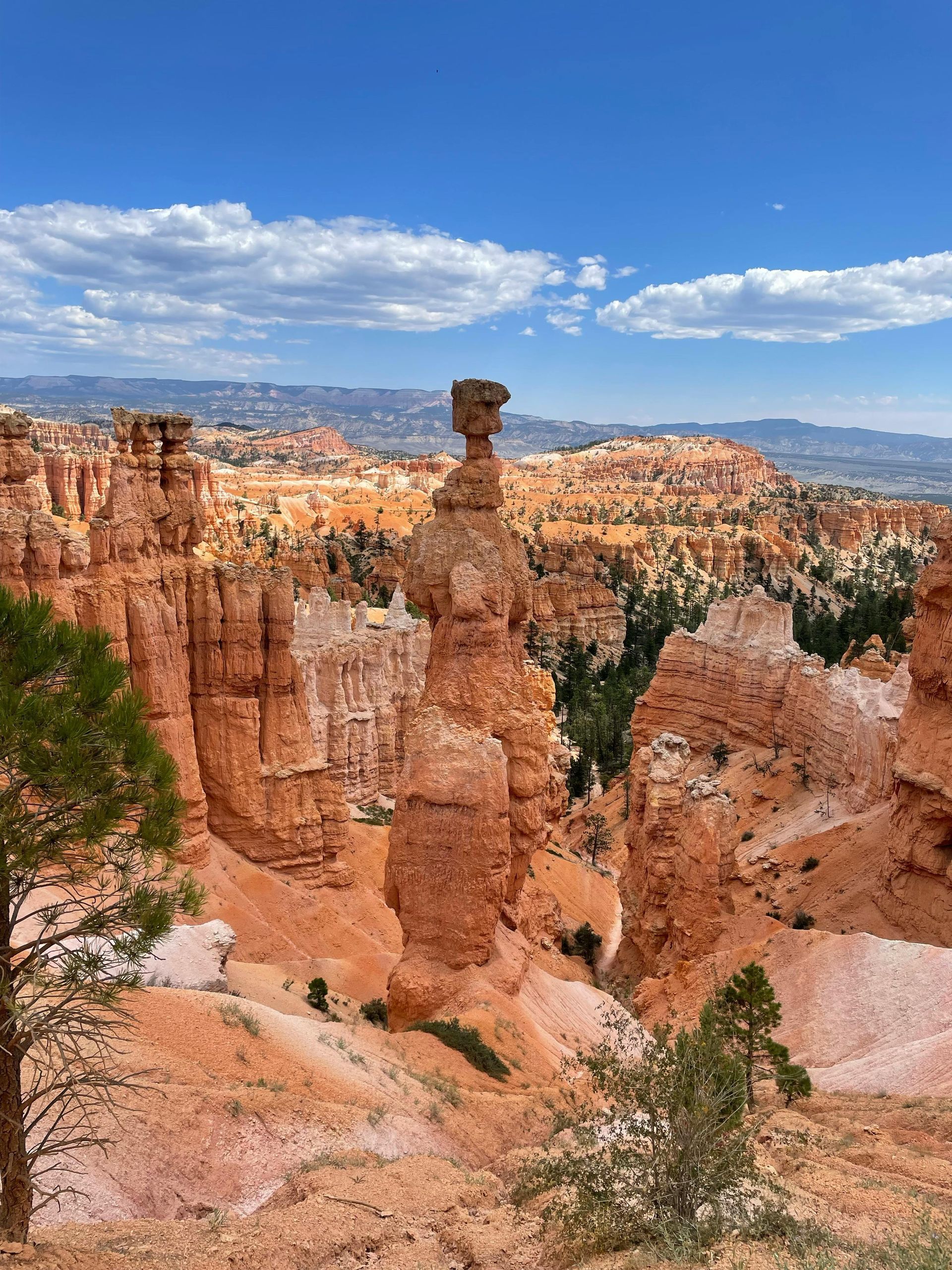
Famous for its extraordinary landscape of crimson, orange, pink, and white hoodoos, Bryce Canyon National Park is one of Southern Utah's most spectacular destinations. Thousands of towering rock spires fill a series of natural amphitheaters, creating a landscape that changes dramatically with the light throughout the day.
Visitors can experience Bryce Canyon from scenic overlooks along the rim or venture below the rim on trails that wind among the hoodoos. Sunrise Point, Sunset Point, Inspiration Point, and Bryce Point offer some of the park's most breathtaking views.
For guests who want to hike the Navajo Loop and Queen's Garden combination is one of the best ways to experience Bryce Canyon. The trail descends from the rim into the heart of the hoodoos, providing an entirely different perspective than the overlooks above.
Distance: Varies by activity. The popular Navajo Loop & Queen's Garden combination is approximately 3 miles round trip.
Difficulty: Easy for scenic overlooks; Moderate for the Navajo Loop and Queen's Garden hike. Plan approximately 4 to 6 hours to enjoy the main overlooks and a hike. A full day allows time to explore more of the park.
What to Bring:
- Plenty of Water
- Sturdy hiking or walking shoes with good traction
- Sun Protection (hat, sunglasses, and sunscreen)
- Snacks or a packed lunch
- Camera or smartphone
- Layers or a jacket - even during Summer
- Dowloaded park map
- Traction devices during snowy or icy conditions
Safety Precautions:
- Bryce Canyon sits at a high elevation of roughly 8,000-9,000 feet, so visitors may become tired or short of breath more quickly than expected. Take your time and stay hydrated.
- Remember that hikes into the amphitheater begin downhill - you'll have to climb back up to the rim. Allow extra time and energy for the return climb.
- Stay on designated trails and behind railings at overlooks. Steep drop-offs are common throughout the park.
- Summer thunderstorms can develop quickly. Lightning is a serious concern along exposed ridgelines and overlooks.
- Temperatures can change dramatically throughout the day. Carry layers even when the day begins warm.
- Snow and ice are possible from fall through spring and can make trails extremely slippery.
- Wildlife should be observed from a safe distance and never fed.
- Check current National Park Service weather, trail, road, and shuttle information before your visit.
Getting There:
From Slot Canyons Inn, travel west on Scenic Byway 12 toward Cannonville and Tropic. Continue west on Highway 12 through the beautiful Canyon and past Mossy Cave to the round-about and follow signs to Bryce Canyon National Park.
Approximately 45 miles west of Slot Canyons Inn and generally takes about 45 minutes, depending on traffic and road conditions. The journey itself is part of the experience. Scenic byway 12 passes through some of Southern Utah's most beautiful landscapes, making Bryce Canyon an excellent day trip from Slot Canyons Inn.
Whether you simply enjoy the magnificent views from the rim or hike down among the hoodoos, Bryce Canyon offers an unforgettable experience and a wonderful complement to the slot canyons, waterfalls, and remote landscapes surrounding Escalante.